
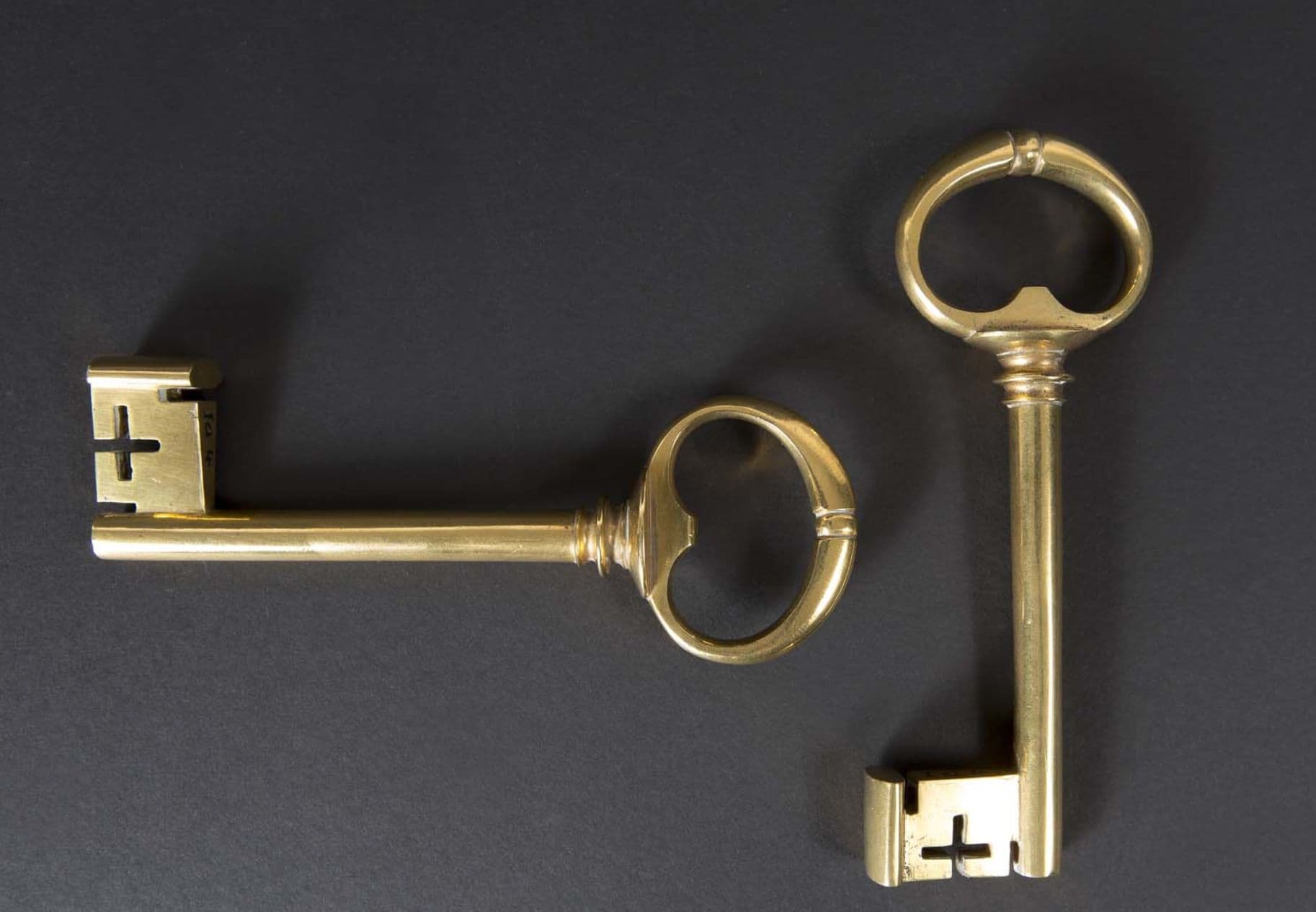
The City Keys of Napoleon
Napoleon visited Amersfoort in 1811. The city hoped for a historic moment, but the emperor was mostly in a hurry.
Read moreLook out over Amersfoort as it was in 1671, from a vantage point that didn't actually exist.
What did Amersfoort look like in the seventeenth century? In the painting Gezicht op Amersfoort, artist Matthias Withoos brings the city to life. You look out over towers, city walls, windmills and the River Eem. The painting is full of movement and detail. The longer you look, the more you discover.
For this painting, Withoos chose a striking perspective from which to depict the city. Many artists painted Amersfoort from the Amersfoortse Berg. Withoos instead looked at the city from the north-west. This means you see not only the churches and city walls, but also the area outside the city.
It looks as though you are gazing down at Amersfoort from a great height. Yet this vantage point did not exist at all. There was no hill or tower there. Withoos created this image from his memories, his own perspective on the city and with the help of various maps of the city. A painter of great talent — which is why his paintings were already enormously costly in the seventeenth century.
If you wanted a painting by Withoos to hang on your wall, it would have cost you between 300 and 600 guilders at the time. Other paintings by other artists could be had for between 10 and 40 guilders. This placed Withoos's work among the most expensive cityscapes of the era.
In the painting you discover ships on the Eem, windmills along the city's edge and bleaching fields where cotton was laid out to dry. In the seventeenth century, textiles played an important role in Amersfoort. Withoos shows how lively the city was. You can also see the drawbridge and the bustle on the water. People work the land, goods are transported and small ships sail towards the city.
Matthias Withoos was born in Amersfoort and learned to paint from artist and architect Jacob van Campen at the Randenbroek estate. He later travelled to Rome, where he studied the art of classical antiquity. After his return, Withoos grew into a well-known Amersfoort resident.
The painting is almost five metres wide. As a result, it feels as though you yourself are looking out over the city. You can see small ships on the water, people at work and buildings such as the Lieve Vrouwetoren and the Koppelpoort that are still recognisable in the old city centre today. In the lower right are conspicuous glacial boulders. They may be a reference to the famous stone-rolling event of 1661 — a story that is still connected with Amersfoort.
Napoleon visited Amersfoort in 1811. The city hoped for a historic moment, but the emperor was mostly in a hurry.
Read moreA fierce bolt of lightning set the Onze Lieve Vrouwetoren ablaze. Carpenter Lenaart Nicasiusz saved the city from disaster.
Read moreAbove a bakery in Amersfoort, young women supported the resistance through a secret telephone exchange.
Read more