
Eyewitnesses of the War
On view | Permanent
What does war do to a city? And to the people who live there? In this permanent exhibition, you discover how the war changed everyday life in Amersfoort. Eight eyewitnesses share their personal stories. Their diaries, photographs and objects show how great the impact was on ordinary families, streets and neighbourhoods.
You follow the stories of people who experienced the war at close quarters. From young people who wrote their thoughts in a diary to residents who lived with fear, scarcity and uncertainty. The exhibition shows how the occupation was not only visible on the streets, but also felt within families, in schools and in everyday life.
Living in occupied Amersfoort
The war comes close through the experiences of the people of Amersfoort themselves. Their memories concern bombardments, hunger and loss, but also friendship, hope and small moments of freedom. It is precisely these personal stories that make history recognisable and human.
The diary of Bep and Greetje
Particularly striking are the diaries of Bep and Greetje. They were around fifteen years old when the war changed their lives. They write about school, falling in love and the tension of the final days of the war. Other residents also recorded their experiences. Their words give photographs and objects a personal meaning.
Names and stories that endure
Not everyone had the chance to keep telling their story. More than 350 Jewish residents of Amersfoort were murdered during the war. Resistance fighters lost their lives and thousands of prisoners at Kamp Amersfoort were held in harsh conditions.
The exhibition gives these people a face once more. Behind every story lies a life, a family and a future that was abruptly cut short. Through personal documents, photographs and objects, a compelling picture emerges of what the war meant for the city and its inhabitants.
Liberation
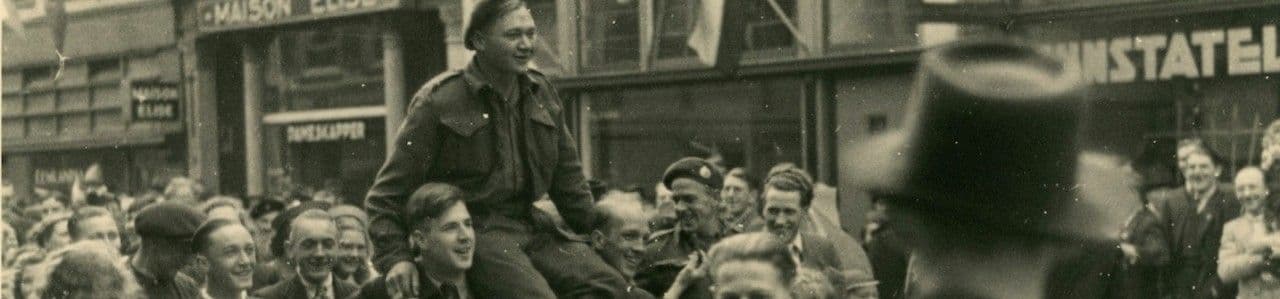
Even after the German capitulation on 5 May 1945, Amersfoort was not truly free. German soldiers still walked armed through the city and the tension remained palpable in the streets. In clashes between Germans and resistance members, young Elfriede Ingenkamp and Frans van Opijnen lost their lives.
A city between war and freedom
A small photo exhibition with diary fragments shows how confusing and emotional these days were. People celebrated liberation, while fear and uncertainty remained. Collaborators were arrested and abused by fellow citizens. At the same time, relief grew as Canadian troops entered the city and Kamp Amersfoort.
That liberation did not mean that normal life immediately returned. Thousands of Canadian soldiers remained in Amersfoort for months. Normal life was still far away.
Plan your visit
Opening hours
| Day | Time |
|---|---|
| Monday | Closed |
| Tuesday | 10:00 - 17:00 |
| Wednesday | 10:00 - 17:00 |
| Thursday | 10:00 - 17:00 |
| Friday | 10:00 - 17:00 |
| Saturday | 10:00 - 17:00 |
| Sunday | 10:00 - 17:00 |
Admission
| Category | Price |
|---|---|
| Adults | 16 euro |
| Youth up to 18 years | Free |
| CJP | 7 euro |
| Students | 8 euro |
| Museumkaart | Free * |
| VriendenLoterij VIP CARD | Free |
| ICOM | Free |
| Rembrandt Card | Free |
| OVF members | Free |
| Friends of Museum Flehite | Free |
| Waterlijn / Keilijn | 8 euro ** |
| Groups from 10 persons | 11 euro p.p. |
Accessibility
More information about accessibility, visiting with a wheelchair or assistance dog can be found on the Accessibility page.
Not sure whether the museum is suitable for your situation? Please feel free to contact us during opening hours via 033-247 11 00 or info@museumamersfoort.nl.
Featured
Summer programme 2026: activities for everyone
From workshops for children to guided tours for adults
Read more